No more dimes? Tracking the payphone’s history from necessity to nostalgia
You might remember making a collect call on a payphone. You might have felt the panic of forgetting a dime or a quarter. When the operator asked for your name, you might have squeezed your whole message into those few short seconds. Now, cellphones have made that memory a relic of the past.
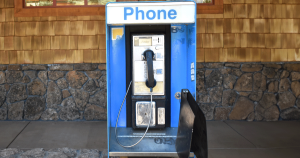
Although it may be sad to think about how the days of the payphone are gone, new technology is bringing people together across great distances. The rise and fall of the payphone may surprise you, even if you remember it all yourself.
Inventing the payphone
After the telephone was invented and patented, the first payphone was installed in 1889 by William Gray. He developed the invention after no one would let him use their phone to call a doctor for his wife. Originally, people would pay after making their calls instead of doing so beforehand. The pre-pay method became standard when the first of its kind was installed in Chicago in 1898.
By 1902, over 81,000 payphones were actively being used in the United States. As technology advanced, the wooden payphone booths were slowly replaced by glass-door payphones in the 1950s. When 1960s rolled around, the number of payphones hit seven figures.
Cellphones start taking over
Everything started changing in 1973 when the first portable phone prototype was approved. For the payphone, this spelled an unforeseen end to the public service. At the turn of the millennium, cellphones started to become mainstream, pushing the payphone to the side.
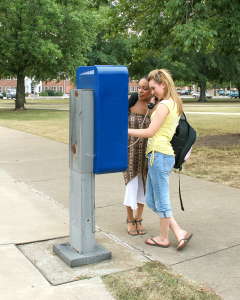
Payphones were still the cheapest way to make calls for people on the go, but the number of phones started to decline. In 2001, the first phone company in the business announced its departure from the service – just six years after payphones reached their peak number of phones with 2.6 million nationwide.
The last payphones
Over a decade ago, the last major payphone service provider jumped ship as the cellphone continued to take over. Just two years ago, the last payphone in New York City was removed, marking the end of an era.
What does the future of the payphone look like now? One day, just like the vinyl record player, the payphone could come back in a new way. Some cities are trying to turn old payphone booths into Wi-Fi hotspots and charging stations for cellphones. Although nostalgia could bring the payphone back, it might be comforting to know many locations are still dedicated to connecting people from far away.
Sources: ABC, Smithsonian